
Monsoon in August was almost 24 per cent below normal, which was the sixth driest August since 1901. It came on the back of a 7-per cent monsoon shortfall in July.

Several experts are of the view that inflationary pressure, including that in food items, may build from October with economic activity gathering steam. However, the price movement in three key items of tomato, onions and potatoes, commonly known as TOP, may give some solace in the months to come. Traders and market watchers said the price movement in all the three will remain within the band sans any unusual spikes.
.jpg)
The Union government's offer of settling the retrospective taxation case with Cairn Energy may hinge on Vedanta withdrawing the ongoing arbitration from the Singapore Tribunal on the same issue. The government has offered to refund Cairn Energy Rs 7,900 crore that it had collected under the retrospective tax demand on fulfilment of certain conditions, including withdrawal of pending litigation and furnishing of an undertaking to the effect that no claim for cost, damages, interest, etc., would be filed. This condition is also part of the Taxation Laws (Amendment) Bill, 2021, passed by Parliament recently.
IMD has decided to increasingly use cutting-edge technology such as artificial intelligence (AI) and machine learning (ML) in forecasting, both to avoid such glitches and to counter the disruption of normal seasonal patterns as a result of climate change. It has formed various internal sub-groups of senior officials and meteorologists to decide on how best to use AI and ML in predicting cyclone intensity, and in making short-range weather forecasts (those valid for up to three hours) as well as long-range forecasts.

From Covid-19 essentials, such as Vitamin C supplements and thermometers, to bicycles, laptops, and personal weighing scales, demand for certain items galloped during last financial year as the pandemic altered what Indians used on a day-to-day basis. Imports of outdoor sports equipment, handbags for women, and dentures, among others, plummeted. With outdoor activities coming to a halt last year and schools functioning virtually, imports of sports goods witnessed a decline, while inbound shipments of laptops and battery chargers saw a sharp uptick, according to the import data for the financial year 2020-21.
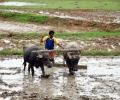
According to latest data, crops have been sown in around 72.13 million hectares, which is 8.90 per cent less than the same period last year.

The death of a 11-year-old boy due to 'bird-flu', even before the devastating effects of the second Covid wave have waned, has alarmed the medical fraternity though they assert that human-to-human transmission of H5N1 virus is extremely rare. The event has also put the Rs 90,000 crore domestic poultry industry which was seeing some uptick in demand after months of low sales last year into a spot of bother, as any curb on sale or production of eggs or chicken could have a devastating impact on its revenues. It is estimated that around 60 million people are directly impacted by the poultry sector in India. H5N1 virus, also commonly known as bird flu, is known to spread from chickens but other birds such as ducks and crow are also carriers of the virus.

Sugarcane dues accruing to farmers rose to almost Rs 21,321 crore as of May 2021. Of that Rs 18,820 crore is for the cane supplied in the current season, which will end in September, while the remaining Rs 2,501 crore is from previous years. Of the pending sugarcane dues of 2020-21, almost 63 per cent accrues to the poll-bound state of Uttar Pradesh. The remaining are from Maharashtra and others.
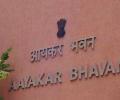
Amid economic uncertainties owing to the pandemic, the government's key revenue agency, the Income Tax Department, has close to 400 vacancies at commissioner level and above, affecting its functioning. Seventy-three of the 91 chief commissioner positions are lying vacant, with some for more than a year. Chief commissioner is the second-highest post in the department, below principal chief commissioner, which is at par with secretary in a ministry.
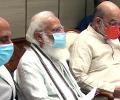
New ministry will bring much-needed transparency in the functioning of the cooperatives, which so far have been riddled with allegations of political interference and mismanagement.

India conceding ground to bring only top 100 digital companies like Google, Facebook, and Netflix into the global taxation pact may have revenue implications. This will mean that New Delhi will have to withdraw the contentious 2 per cent equalisation levy on e-commerce operators by 2023. This may have revenue implications for India, experts pointed out, as the equalisation levy has a much lower annual revenue threshold of Rs 2 crore (euro 0.2 million) as against euro 20 billion agreed by 130 countries at the Organization for Economic Cooperation and Development (OECD). India, along with other developing countries, was pitching for at least euro 1 billion threshold to cover at least 5,000 global entities. India collected Rs 2,057 crore from the equalisation levy in 2020-21, an 85 per cent growth over Rs 1,136 crore in the previous fiscal.

'From the tiniest to mid-level organisations and even some at the lower end of the large-scale ones would say that computerisation and the extensive documentation and regulatory requirements for GST have made the compliance process worse in many cases.'

On a day when several mandis across the country are closed in protest against the recent Centre's decision to impose stringent stock-holding limit on pulses, the government clarified that limits have been defined as retail prices are still higher than last year though there is some moderation in the last few weeks. It said the same logic also holds true for edible oils, the import duties on which was slashed few days back and curbs lifted on import of refined oils. The decision on edible oil and pulses have caused massive resentment among the trading community as it came just ahead of the kharif sowing season, when prices were off their peaks due to multiple steps announced previously. Sources said trading activity in some of the major mandis dealing in pulses such as Sholapur, Amravati and Latur in Maharashtra, Indore and Dewas in Madhya Pradesh along with Kanpur in Uttar Pradesh was impacted as traders went on a flash strike in protest against the decision to impose stock limits.
For the second month running, the demand for work under the flagship MGNREGA scheme has been lower than in 2020, which was an extraordinary year for the scheme. Latest data shows that around 35.1 million households have sought work under MGNREGA this June, or 21.48 per cent lower than the number that had sought work in the same month of 2020. This May, some 27.6 million households had sought work under the scheme, or 26.01 per cent lower than the same month last year.

With rainfall and monsoons becoming highly unpredictable partly due to climate change and partly due to usual changes in weather patterns, it is such innovations by IMD which will help in planning better, reports Sanjeeb Mukherjee.
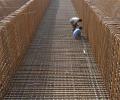
According to the latest report from Stranded Workers Action Network (SWAN), a voluntary effort started in March 2020 to mobilise relief for stranded migrant workers, almost 92 per cent workers, whom the group contacted between April 21 and May 31, had not received any money from their employer. This was after restrictions were imposed and work had stopped. The survey, which was conducted among 1,396 worker groups, adding up to 8,023 people that included 4,836 women and children, showed that 76 per cent of the workers had less than Rs 200 left with them.

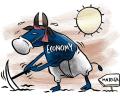
As India looks to mend its Covid-battered economy, one thing that will grab the attention of all concerned is the path that both wholesale and retail inflation will follow. Even the Reserve Bank of India in its latest policy statement said, "Going forward, the inflation trajectory is likely to be shaped by uncertainties impinging on the upside and the downside.
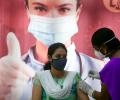
'I'll give it to the vaccine manufacturers without guarantees, take the payment in advance and give me the supplies.' 'The moment you give me one lot of supply, I'll give you more.'


The vacancies are learnt to be impacting the I-T department's day-to-day functioning.
